Peptides
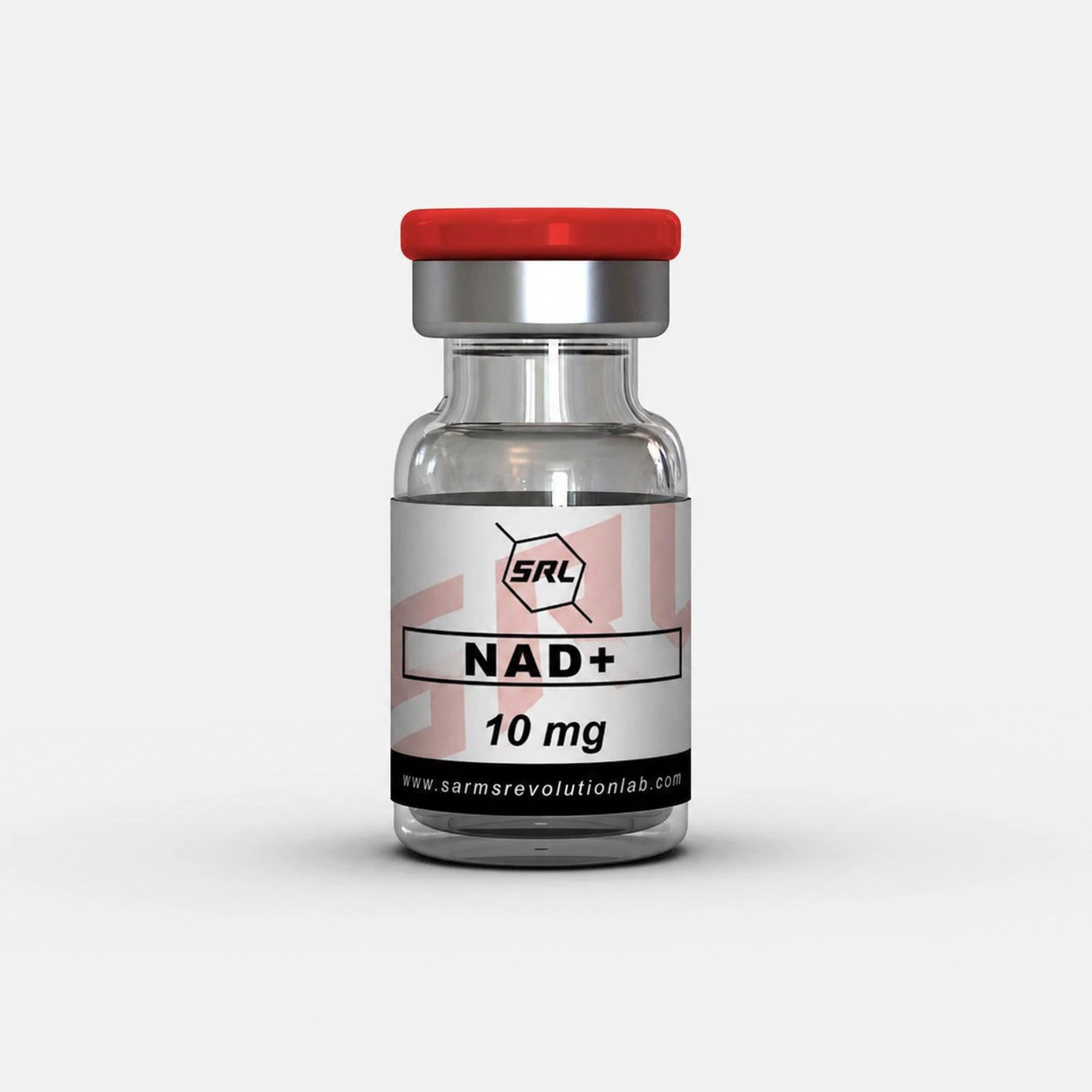
NAD+
Size: 10 mg
NAD+ 10 mg is an essential coenzyme studied in cellular energy metabolism, redox signalling and DNA-repair pathways; it is a research compound rather than a peptide. SRL supplies this vial strictly for laboratory and in-vitro research—not for human or veterinary use.
$84.99
Buy 5 -> get 1 FREE
Buy 10 -> get 3 FREE
Buy 20 -> get 7 FREE
| Rule | Range | Discount |
|---|---|---|
| Individual Products Quantity Discount | 3 - 5 | 20% $67.99 |
| Individual Products Quantity Discount | 6 - 8 | 25% $63.74 |
| Individual Products Quantity Discount | 9 - 11 | 30% $59.49 |
| Individual Products Quantity Discount | 12 - 23 | 35% $55.24 |
| Individual Products Quantity Discount | 24 + | 45% $46.74 |
Pay by E-Transfer

fast
Delivery

Secure
ordering
High
potency

Satisfaction
guarantee
Description
NAD+ 10 mg is offered by SARMs Revolution Lab for laboratory research in Canada. NAD+ means nicotinamide adenine dinucleotide, a cellular cofactor involved in redox reactions and enzyme signalling. Although it appears in the SRL peptide catalogue, NAD+ is a dinucleotide cofactor, not a peptide.
NAD+ 10 mg research product information
| Product | NAD+ (nicotinamide adenine dinucleotide) |
|---|---|
| Format | one 10 mg vial |
| Research class | cellular redox cofactor |
| Seller | SARMs Revolution Lab, Canada |
| Intended use | laboratory research only |
Product identity, oxidation state, concentration and batch documentation should be evaluated separately. Evidence about NAD+ precursors such as NR or NMN does not automatically apply to direct NAD+ material.
What is NAD+?
NAD+ participates in oxidation-reduction chemistry central to cellular metabolism. It also serves as a substrate for enzymes including sirtuins and PARPs, linking NAD biology with signalling, gene regulation and DNA-repair research.
Research on NAD metabolism is often simplified into “energy” or “anti-aging” promises. Peer-reviewed reviews caution that most intervention evidence involves precursors, animal models or tissue-specific measurements. Human clinical effects remain inconsistent and cannot be generalized to this 10 mg vial.
How is NAD+ analyzed in laboratory research?
Researchers may examine redox ratios, enzyme activity, metabolite turnover, compartment-specific NAD pools and stability. Experimental conditions are critical because NAD+, NADH and related precursors are chemically and biologically distinct.
A 2025 review concluded that human evidence for age-related decline and precursor supplementation remains limited and tissue-specific. This page therefore avoids promising energy, recovery, longevity or disease treatment.
NAD+ evidence and product limits
Clinical findings from nicotinamide riboside, nicotinamide mononucleotide, niacin or nicotinamide should not be presented as direct evidence for this product. This page does not provide dosage, infusion, injection, reconstitution or treatment instructions.
NAD+ 10 mg frequently asked questions
Is NAD+ a peptide?
No. NAD+ is a dinucleotide cofactor. It is grouped in this catalogue for research navigation, not because it has a peptide structure.
How much NAD+ is supplied?
The SRL listing identifies one 10 mg vial. Confirm the product label and batch documentation.
Are NAD+, NMN and NR the same?
No. NMN and NR are precursors involved in NAD biosynthesis. Their absorption, metabolism and evidence cannot be substituted for direct NAD+ data.
Does NAD+ research prove an anti-aging or energy benefit?
No guaranteed human outcome is established for this product. The literature remains heterogeneous and many findings are preclinical.
Does this page provide an infusion or injection protocol?
No. It provides scientific and product context only.
Where can mitochondrial peptide research be compared?
See the MOTS-C research page and the SRL peptide category. The link does not recommend combining products.
Scientific references
- NAD+ precursor supplementation in human ageing: clinical evidence and challenges. 2025.
- Therapeutic potential of nicotinamide adenine dinucleotide: evidence and formulation challenges. 2020.
- Regulation of and challenges in targeting NAD+ metabolism. 2024.
Research-use notice: NAD+ 10 mg is offered strictly for laboratory research and analytical work. It is not intended for human consumption, self-administration, diagnosis, treatment or veterinary use.
Be the first to review “NAD+” Cancel reply
You must be logged in to post a review.
ABOUT OUR
EXTERNAL
TESTING PROCEDURE
Relying on third-party laboratory testing ensures an impartial and unbiased information source, offering consumers the utmost transparency. Independent testing prevents companies from manipulating internal results or disseminating inaccurate information.
Objectives of External Testing
- Ensuring Transparency for Consumers
- Providing Unbiased and Independent Reports
- Ensuring Safety Standards
Reviews
There are no reviews yet.