Peptides
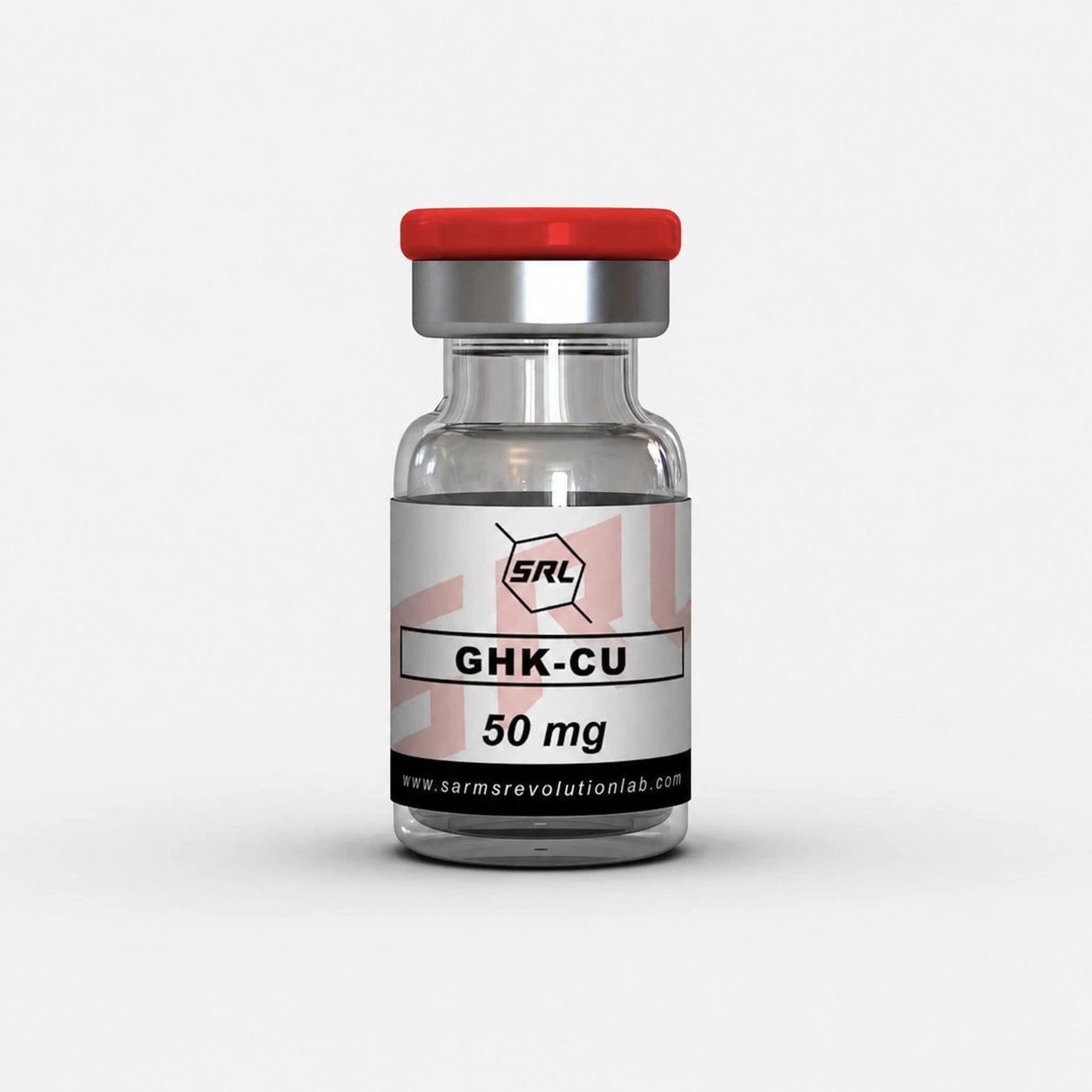
GHK-CU
Size: 50 mg
GHK-Cu 50 mg is a naturally occurring copper-binding tripeptide studied for tissue remodelling, collagen signalling, skin biology and cellular repair pathways. SRL supplies this vial strictly for laboratory and in-vitro research—not for human or veterinary use.
$40.99
Buy 5 -> get 1 FREE
Buy 10 -> get 3 FREE
Buy 20 -> get 7 FREE
| Rule | Range | Discount |
|---|---|---|
| Individual Products Quantity Discount | 3 - 5 | 20% $32.79 |
| Individual Products Quantity Discount | 6 - 8 | 25% $30.74 |
| Individual Products Quantity Discount | 9 - 11 | 30% $28.69 |
| Individual Products Quantity Discount | 12 - 23 | 35% $26.64 |
| Individual Products Quantity Discount | 24 + | 45% $22.54 |
Pay by E-Transfer

fast
Delivery

Secure
ordering
High
potency

Satisfaction
guarantee
Description
GHK-Cu 50 mg research product information
| Product name | GHK-Cu (copper tripeptide-1) |
|---|---|
| Format | one 50 mg vial |
| Research class | copper-binding tripeptide complex |
| Seller | SARMs Revolution Lab, Canada |
| Intended use | laboratory research and analytical work only |
Product identity, concentration and batch-specific analytical documentation should be evaluated separately. This page does not claim pharmaceutical equivalence or clinical efficacy.
What is GHK-Cu?
GHK is a three-amino-acid peptide that can bind copper(II) to form GHK-Cu. Peer-reviewed reviews describe this complex in relation to extracellular-matrix remodelling, cell migration, collagen-related pathways, oxidative stress and inflammatory signalling. These are broad biological processes, not proof that every proposed use is established in humans.
GHK levels and copper binding have been studied for decades, but the evidence includes cell experiments, animal models, formulation studies and a smaller body of human observations. A responsible interpretation keeps those evidence levels separate.
How is GHK-Cu analyzed in peptide research?
Laboratory work may examine fibroblast behaviour, keratinocyte response, gene expression, matrix proteins, copper transport and wound-model signalling. Results depend on the experimental model, concentration, exposure conditions and formulation. Findings from cultured cells or animals cannot automatically predict a clinical result.
Some reviews report effects on collagen synthesis, tissue remodelling and antioxidant pathways. These publications support continued investigation; they do not establish a universal treatment, route of administration or cosmetic outcome for this SRL vial.
Evidence limits and Canadian context
GHK-Cu appears in cosmetic and research discussions, but a research material is not automatically an authorized therapeutic product. Health Canada has warned consumers about unauthorized injectable peptides marketed online. Researchers should verify product identity, intended use and applicable rules before beginning work.
This page provides scientific context only and does not provide dosage, injection, reconstitution, injury-recovery or treatment advice.
GHK-Cu 50 mg frequently asked questions
What does GHK-Cu stand for?
GHK refers to glycyl-L-histidyl-L-lysine. The “Cu” identifies the copper complex associated with the tripeptide.
How much GHK-Cu is supplied?
The SRL listing identifies one 50 mg vial. Consult the label and available batch documentation for product-specific details.
Is most GHK-Cu evidence clinical?
No. The literature spans biochemical, cell, animal and human research. The model used in each paper should be identified before interpreting a result.
Does GHK-Cu research prove a skin, hair or recovery benefit?
No guaranteed outcome should be inferred. Published mechanisms and experimental findings support research questions, not a promise about this commercial vial or an individual result.
Does this page include mixing or dosing instructions?
No. It does not provide a protocol, dosage, reconstitution or administration guidance.
Where can related research products be reviewed?
Researchers can compare the BPC-157 research page, the TB-500 research page and the full SRL peptide category.
Scientific and regulatory references
- Pickart L. The human tri-peptide GHK and tissue remodeling. 2008.
- Pickart L et al. The potential of GHK as an anti-aging peptide. 2022.
- Health Canada warning concerning unauthorized injectable peptide drugs.
Research-use notice: GHK-Cu 50 mg is offered strictly for laboratory research and analytical work. It is not intended for human consumption, self-administration, diagnosis, treatment, cosmetic use or veterinary use.
Be the first to review “GHK-CU” Cancel reply
You must be logged in to post a review.
ABOUT OUR
EXTERNAL
TESTING PROCEDURE
Relying on third-party laboratory testing ensures an impartial and unbiased information source, offering consumers the utmost transparency. Independent testing prevents companies from manipulating internal results or disseminating inaccurate information.
Objectives of External Testing
- Ensuring Transparency for Consumers
- Providing Unbiased and Independent Reports
- Ensuring Safety Standards
Reviews
There are no reviews yet.